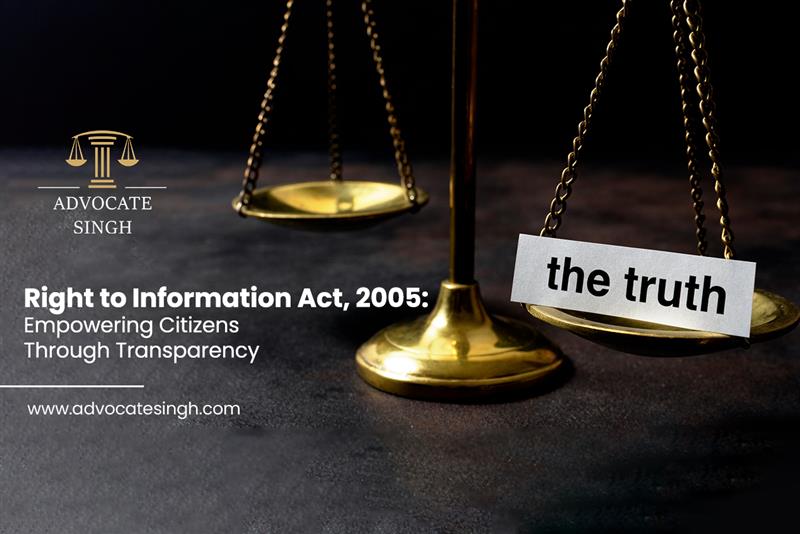
The role of government in a democratic country is to serve its citizens. For this role to function properly, citizens must understand what their government does on their behalf. Throughout India’s history, it has been difficult to gain access to government information due to a lack of transparency and lack of access to documents and decisions, which resulted in a lack of accountability. As a result, citizens experienced a lack of transparency, which resulted in confusion, delays, and corruption.
The Right to Information Act of 2005 changed that by providing legal rights for Indian citizens to request information from and about the government. The Right to Information Act in India goes beyond being just a law; it helps to create a more transparent and accountable system of government, where citizens can be informed and participate proactively.
Understanding the Right to Information Act
The Right to Information Act enables every citizen in India to ask for information about Public Authorities, which will be provided by these authorities within a predetermined time frame as mandated by law. The primary objectives of The Right To Information Act are to create transparency, increase accountability, and improve the quality of governance.
Prior to the implementation of The Right To Information Act, citizens had to rely on the goodwill or influence of others to obtain information about government activities, policies, recruitment practices, and public works projects. The Right To Information Act establishes that citizens can now request and get answers concerning anything, as opposed to merely relying on another person’s cooperation or goodwill.
Why the RTI Act Is Important for Citizens
By giving citizens access to information through the RTI Act, citizens are empowered to ask questions about how their Government is functioning. If people know how their Government works, they are more likely to be aware of problems and issues within it, which will lead to changes in the way Government operates.
Under the Right to Information Act of India, citizens can:
- Know what public funds are going to be spent on
- Expose corruption and other irregularities occurring within Government
- Thereby causing improvements in the delivery of public services
- Knowing about Government decisions that affect daily lives.
As a result of the RTI Act, the strength of democracy has been enhanced by providing a means for citizens to know what is occurring within their Government.
Who Can File an RTI Application
The RTI Act is one of the strongest and most accessible Acts in India. Any citizen of India may submit an RTI application. There is no requirement to provide justification for seeking this information or state how you plan on utilising it.
Therefore, the legislation is considered to be user-friendly for all citizens. RTI has been used effectively by many individuals (including students, professionals, journalists, activists and ordinary citizens) in order to obtain information regarding pensions, ration cards, payments for work done, public works and other state-related issues.
Citizen Rights Under RTI Act
The RTI Act states how to protect the rights of citizens to be able to obtain information from other persons or entities. The RTI Act states that citizens may request information in whatever form they wish, including through the use of documents, records, files, emails and/or reports and/or certified copies of records, to allow access to authentic/approved official records.
RTI Act also stipulates that citizens can expect to receive requested information within a defined timeframe and generally, this information should be received within thirty (30) days. However, if the information requested relates to any matter(s) involving a person’s life or personal liberty, that requested information should be provided to the requestor within forty-eight (48) hours. The RTI Act allows for inspections of records and works undertaken by the government, allowing citizens to review records and check progress on public projects.
In instances where information is denied or not provided timely, the RTI Act allows for citizens to appeal their appeal for the requested information and provides a defined process for making an appeal, ensuring that every citizen has access to a remedy and therefore no citizen will suffer from the lack of access.
The RTI Act creates a legal mechanism for citizens to obtain information and therefore is an effective practical tool for establishing transparency and accountability within the government.
Public Authorities Under RTI Act
The RTI Act is all-encompassing. Under the RTI Act, basically all entities that either utilize public financing or provide public service are classified as public authorities.
These Groups include the following examples:
- Government Ministries and Departments on the central and state level
- Local Government entities at all levels
- Public Sector Organizations
- Institutions funded or/and backed by the government
- Colleges and Universities- all Receiving Revenue from Public Funding
There are also certain Private organizations that are subject to the RTI, in instances when that organization receives Government Funding or is closely regulated/monitored by the Government. The wide scope of the RTI Act enables for the continued transparency of all aspects of the Government’s utilization of public financing in any manner.
What Information Can Be Sought Under RTI
The Right To Information Act allows individuals to request information about the following topics from their government:
- Government Implemented Programs/Policies
- Working Capital & Spending
- Employee Hiring & Selection Procedures
- Projects Related to Development and Facility Construction
- Departmental Guidelines, Procedures and Rules
That said, this same Act attempts to balance the public’s right to know with the requirement that the public have a duty to protect sensitive information. Thus, there are situations in which no information will be made available for disclosure.
Impact of RTI on Governance
When the Right to Information (RTI) Act was enacted, it made a significant impact on government operations. Government officials are now more careful and organized when it comes to maintaining official records. Furthermore, citizens are becoming increasingly aware that they can ask questions regarding how decisions are made in the government.
Through RTI, there have been many instances where citizens have uncovered fraudulent activities, corrected mistakes made by administrators, and improved the ability of government employees to effectively serve citizens. The use of even the most basic RTI request has allowed citizens to resolve issues that may have gone unaddressed for years.
Additionally, implementation of the RTI Act has resulted in increased participation by citizens in their government where they have become more knowledgeable about their responsibilities as well as their rights as citizens.
Challenges Faced by the RTI Act
The RTI Act has proven successful but is facing many difficulties, including; delays in responses, backlog of appeals, misuse of RTI applications, and the lack of citizen awareness about their right to access information. In addition to the previous challenges faced by RTI activists, many activists have previously been at risk due to threats, illustrating the need for more substantial protection mechanisms for RTI activists.
In order to ensure continued transparency and support for the transparency movement, it is critical to address the above challenges.
Why RTI Remains Relevant Today
The importance of transparency in today’s technologically advanced and rapidly evolving world cannot be understated. Citizens rely on government decisions affecting them directly, and therefore having access to the information used by governments to make those decisions fosters both trust and accountability.
Under India’s Right to Information Act of 2005, the Indian government empowers Indian citizens through this Act. It encourages ethical governance for governmental entities and serves as a reminder to public authorities that their actions are subject to public scrutiny.
Final Words
In the journey of India towards becoming a more democratic country , The Right To Information Act of 2005 was probably one of the biggest reforms made by the government to empower the common man , provide accountability and increase government transparency.
Knowing your rights under the RTI Act and what is expected of the public authorities as per the RTI act allows individuals to have more active involvement in good governance. Instead of being seen as ‘rebellious’ , asking questions should be viewed as being a responsible citizen who is aware of his/ her rights and the government obligations .