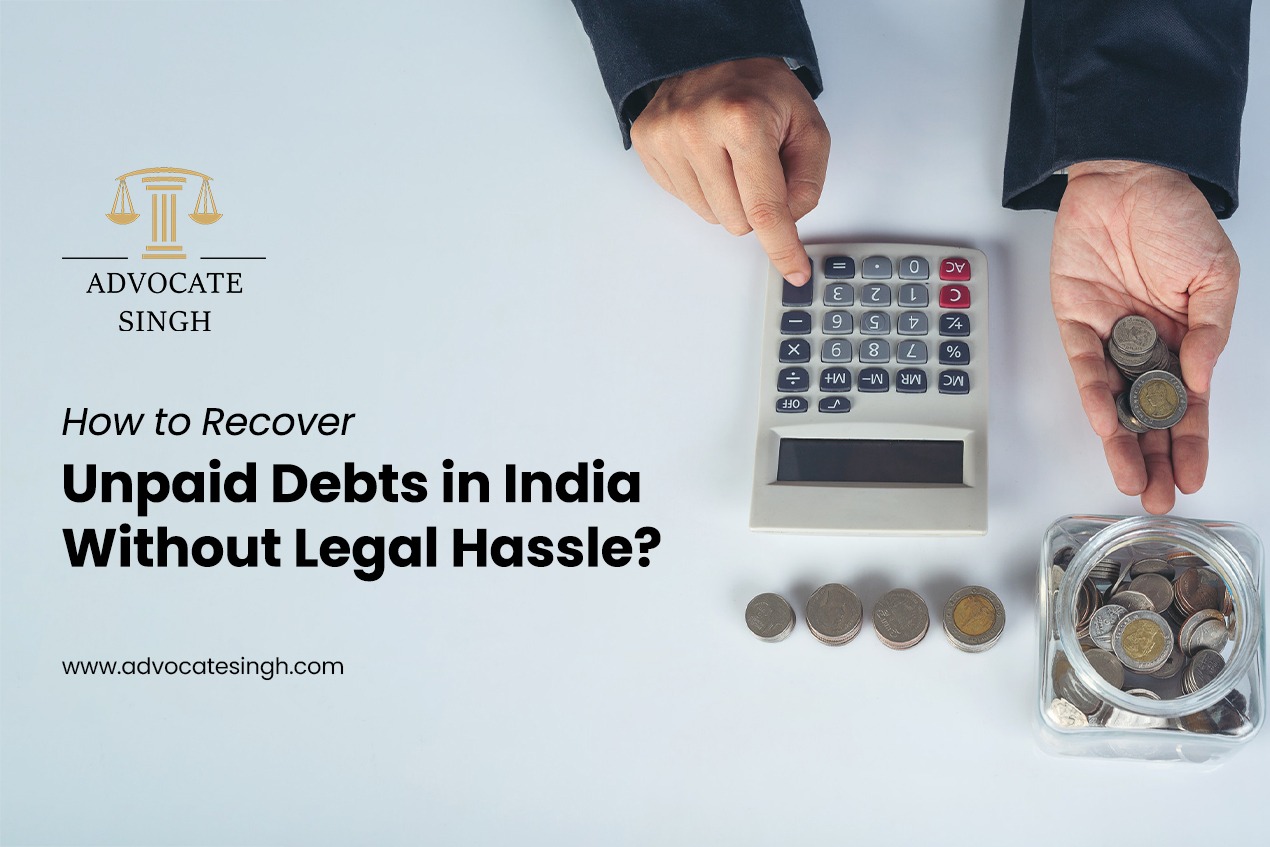
Unpaid debts are one of the biggest problems that many people face in India. Whether you are a professional or an entrepreneur, you will run into situations where someone is late paying you, and your business partner has stopped contacting you. Not only this but even if someone borrowed money and hasn’t paid you back yet, unpaid debts can wreak havoc on both your financial situation as well as your mental well-being.
The reality of the situation is that there are multiple methods available that do not involve the court system or legal notice process; in fact, in most cases, recovering your unpaid debts can be accomplished in a manner that is far less hostile than the court process, and if done appropriately at the right time, these alternative methods can result in a much quicker return of your money.
Let’s understand more about the topic:
Why Unpaid Debts Are Common in India
Understanding the reasons behind unpaid debts is critical before initiating the recovery process. A few key reasons for unpaid debt can include a company’s cash flow issues, the absence of appropriate documentation to support the company’s claim, a history of informal agreements between creditor/debtor, the delay of the business’s payables due to slow or late payments and/or a conscious decision on the part of the debtor to avoid making payment. Generally, the debtor will not have outright refused to make a payment, but continues to postpone their payment obligation.
When you understand the underlying cause of a debtor’s non-payment, it enables you to take an informed course of action instead of reacting out of emotion or anger.
Start With Clear and Polite Communication
Indian debt collections begin with a direct approach, as many times without a follow-up there is no resolution of unpaid accounts.
Communicate directly with the debtor by spelling out a specific dollar amount outstanding. Maintain professionalism and courtesy in these communications, however, do remain tough on requests–don’t be argumentative, accusatory or threatening.
Reiterating an owed amount, re-stating the original agreement’s commitment and asking for a confirmed schedule for payment typically has a better response from the debtors than repeated vague requests for payment.
Debtors become more willing to cooperate once they see that someone is treating the matter seriously.
Move to Written Follow-Ups
In the absence of results from oral communication, written methods of follow-up (email, WhatsApp) can effectively resolve the matter.
When you send a written message, you must clearly state the amount owed, how long the payment has been outstanding, and provide a reasonable timeframe by which the debtor should pay the amount owed. The tone should always remain professional and factual.
The purpose of sending written correspondence serves two distinct purposes: it acts as a motivator for the debtor to respond; it documents the circumstances and timeline in the event the situation escalates later.
At this stage, many people pay their debts to avoid additional problems.
Offer Practical Payment Solutions
There may be reasons other than dishonest behaviour for someone’s inability to repay their debt. For instance, the person may genuinely be experiencing hard times financially.
Rather than demanding all the money be paid back immediately, think about innovatively giving the debtor an opportunity to repay through installment payments, or perhaps just paying a smaller amount at first and then larger amounts with time.
In India, where maintaining relationships is commonly valued, it’s more beneficial to recover your money in several payments over time than to become delayed or involved in prolonged disputes during collections. Using a flexible payment option when negotiating a payment plan increases your chances of recovering your debt.
Send a Formal Payment Reminder or Demand Letter
When a debtor stops receiving reminders, and you have difficulty communicating with them, your next step will be to take more formal action without resorting to legal measures for collecting the debt.
A payment reminder or demand letter should include the following; the amount due and any reminders you may have sent previously, along with the timeframe for when the payment is due, and that if you don’t get the payment by that date, you will take further action.
Being more formal about the matter conveys a sense of urgency. In my experience it’s at this point that most debtors respond to the matter because they know it no longer is an informal matter.
Use Debt Recovery or Collection Services
If your attempts to collect a debt through personal means have failed, a professional debt recovery agency might offer effective alternatives to legal intervention. In India, respected debt collection agencies take an ethical approach by employing structured communication, negotiation techniques, and persistent follow-up as their primary methods for getting paid.
Oftentimes, the mere existence of a third-party agency that is monitoring the situation will encourage the debtor to respond faster than he would normally. When selecting a debt collection agency, confirm that it operates in accordance with all applicable laws and does not engage in harassment or other illegal activities in order to recover your money.
The primary goal of any debt collection agency is to recover the debt and not to torment the debtor.
Consider Mediation or Negotiated Settlement
In cases of unpaid debts, mediation is a viable option for many business and partnership-related disputes. The mediator is an impartial third party who facilitates communication between both parties so that they can find common ground and negotiate an agreeable resolution.
Mediation mitigates conflict, saves time, and minimizes legal costs. It is extremely beneficial when both parties are agreeable to resolving their dispute but cannot come to an agreement because of poor communication or extreme viewpoints.
Secure Your Future Payments Better
Unsecured debt has an important lesson- Preventing Unsecured Debt.
If you want to minimize future risk of nonpayment, you will do so by writing all agreements, regardless of how small the transaction is. Timeframes for Payment and Fees for Delay in Payment must be clearly stated. Businesses should stipulate a timeframe in their invoices when payment is due. Verification of the payment form should also be included on the Business invoice.
Advance payments, billing based on Milestones, and a properly documented work effort will greatly minimize your need to recover unpaid bills in the future.
When Legal Debt Recovery Becomes Necessary
The vast majority of unpaid debts are recoverable through non-legal means, however, there are times when taking formal action against your debtor is necessary. This may include when your debtor has willfully refused to repay, the debt is considerable ]in size, or when fraud or dishonesty have occurred with respect to the debt.
When dealing with unpaid debts legally within India, you have several options available such as sending out a legal notice, initiating a recovery lawsuit, bringing a cheque bounce cases and/or commencing the insolvency process for a corporate entity. All of these are viable methods of recovering your money from your debtor.
Nevertheless, all these methods will take a long time to resolve and you should always consider all other options before resorting to legal action.
Final Words
Getting paid in full from clients who owe you money does not have to involve court or legal headaches in India. Using a methodical process that includes proper communication, written follow-up, flexibility and support from others will generally assist in bad debt repayment successfully.
The best way to recover your unpaid debt in India without court intervention is to act quickly and patiently.
The process of debt recovery can be handled in a manner that does not require conflict or cause additional problems. All that is needed is a clear approach, a sense of patience and a good plan for action.